SVOLT Unleashes Blade 3.0, Hybrid Solid‑State 6C, and Fly Laminate 4.0 at Global Partner Summit
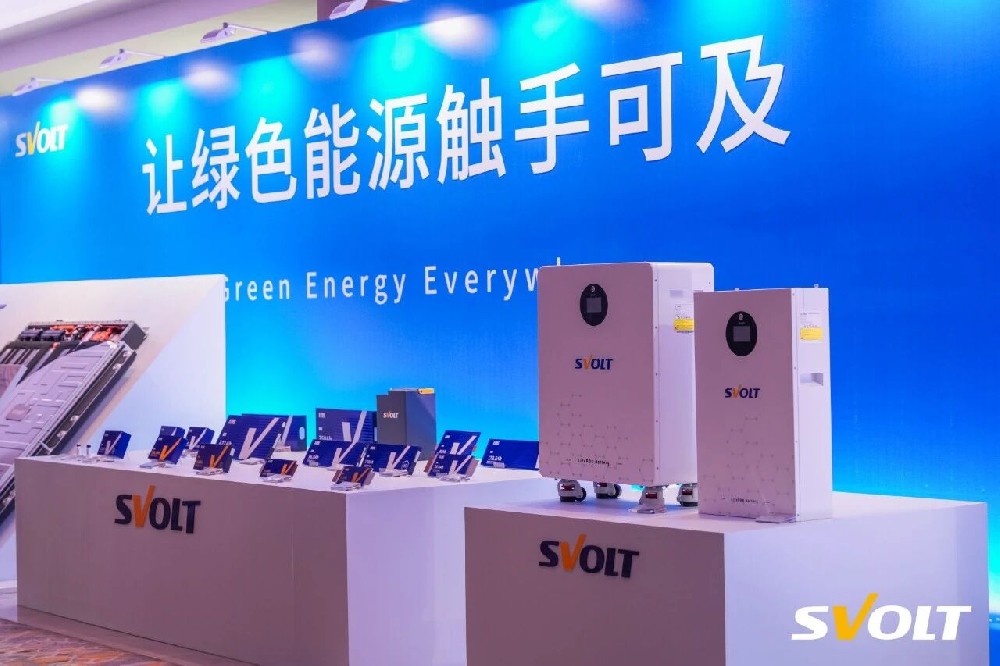
Changzhou, China — SVOLT Energy Technology Co., Ltd. kicked off its 2026 Global Partner Summit on July 16 under the banner “Chain Collaboration, Co‑Creation & Win‑Win.” The event served as a launchpad for a sweeping portfolio refresh across electric vehicle (EV) and energy storage systems (ESS), headlined by the Blade 3.0, a hybrid solid‑state 6C superfast‑charge cell, and a new high‑capacity LFP HEV battery pack. The company also confirmed that its fourth‑generation Fly Laminate 4.0 stacking technology — capable of handling 16 layers simultaneously — will enter mass production before the end of 2026, effectively doubling stacking throughput and resetting industry benchmarks for manufacturing precision and speed.
Two Heavyweights, One Bold Vision
SVOLT is attacking the charging bottleneck from two complementary fronts. The Blade 3.0 battery, built around a 130+ Ah cell, achieves an energy density of 181 Wh/kg and delivers a driving range of over 650 km on a single charge. More impressively, it supports a peak 10C charge rate with an average of 8C, enabling a 10‑80% state‑of‑charge (SOC) top‑up in just 5.25 minutes, and a 10‑97% SOC refill in 8.5 minutes. That performance effectively eliminates range anxiety and idle charging waits, bringing premium ultrafast‑charging capabilities into mainstream vehicles at a cost structure that makes thousand‑yuan‑level fast charging a practical reality for volume models.
⚡ Blade 3.0 at a glance: 130+ Ah · 181 Wh/kg · 650+ km range · 10C peak / 8C avg · 10‑80% SOC in 5.25 min · 10‑97% SOC in 8.5 min
On the ternary‑material side, SVOLT introduced its first hybrid solid‑state 6C superfast‑charge cell designed for scalable mass production. The 150+ Ah cell supports a 120+ kWh pack configuration, pushing range beyond 750 km while maintaining a class‑leading energy density of 233 Wh/kg. With an 8C peak charge rate, the cell replenishes from 10% to 80% SOC in just 7 minutes. Leveraging a hybrid solid‑liquid architecture, the cell reduces thermal‑runaway risk by 25% and cuts cell‑to‑cell pressure variation by 18.5%, delivering a step‑change in both safety and quality consistency. Mass production is locked in for Q3 2027, offering a unified “long range, high safety, ultra‑fast recharge” proposition for premium EV platforms.
Hybrid 6C 150+ Ah · 233 Wh/kg · 750+ km
10‑80% SOC 7 min · Safety thermal risk ↓25%
Pressure variation ↓18.5% · Production Q3 2027
HEV Breakthrough: High‑Power LFP Pack
Addressing the rapidly growing hybrid market, SVOLT unveiled a 5.1 kWh high‑capacity LFP HEV battery pack featuring 16.4 Ah cells with an energy density of 130+ Wh/kg. The pack delivers a 50C pulse discharge rate and exceeds 40,000 cycle life, all while maintaining stable output across a brutal temperature window from ‑40°C to 60°C. This extreme‑climate resilience significantly extends the usable life of hybrid powertrains, making it a compelling choice for next‑generation electrified vehicles.
Four Pillars Refreshed — Lithium & Sodium Dual‑Track
SVOLT also unveiled a comprehensive revamp of its energy‑storage product line, spanning residential, commercial & industrial (C&I), utility‑scale, and data‑center applications. The new generation leverages Fly Laminate 4.0 ultra‑high‑speed stacking and hybrid solid‑state safety architecture to deliver a unified safety framework across all ESS segments.
Residential storage: 122/120 Ah stacked cells with improved cycle life and thermal stability.
C&I storage: 285 kWh CTR (Cell‑to‑Rack) integrated system for simplified deployment.
Utility‑scale storage: 6.29 MWh CTR battery container, optimized for grid‑scale energy shifting.
AIDC / UPS: 90/102 Ah hybrid solid‑state cells designed for mission‑critical backup power.
In parallel, SVOLT showcased its sodium‑ion technology as a strategic reserve pathway for large‑scale storage applications, targeting grid frequency regulation and renewable‑energy curtailment reduction with a low‑cost, long‑duration value proposition. The dual‑track lithium‑sodium strategy underscores SVOLT’s ambition to become a foundational supplier for the new power system, offering both high‑performance and cost‑effective solutions tailored to diverse operational scenarios.
Manufacturing moat: The linchpin of SVOLT’s product blitz is Fly Laminate 4.0, an industry‑first stacking process that simultaneously handles 16 electrode layers in a single pass. This innovation effectively doubles the production efficiency of conventional stacking methods, slashing capital expenditure per gigawatt‑hour while improving alignment accuracy and defect control. With volume delivery slated for late 2026, SVOLT is positioning itself not only as a battery innovator but as a manufacturing powerhouse capable of translating lab‑scale breakthroughs into high‑volume, high‑quality output.
The summit painted a clear picture of SVOLT’s trajectory: aggressive product cadence, relentless pursuit of fast‑charging and safety, and a manufacturing backbone that can scale with global demand. As the industry shifts from “battery‑as‑a‑component” to “battery‑as‑a‑platform,” SVOLT is betting on vertical integration and process innovation to deliver what it calls “mass‑production acceleration” — a promise that the company is now backing with concrete product roadmaps and delivery timelines.